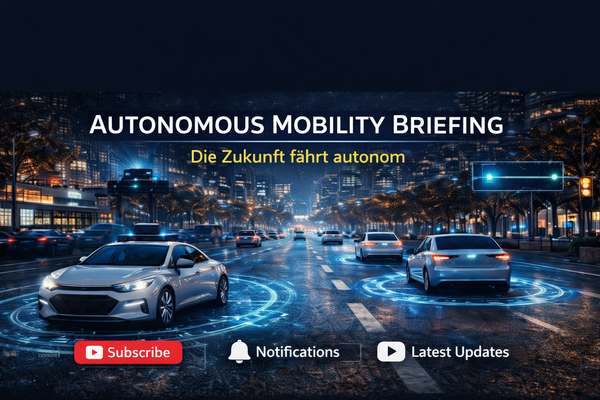
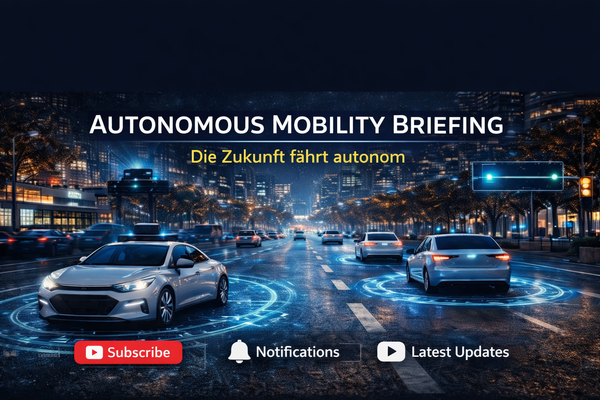
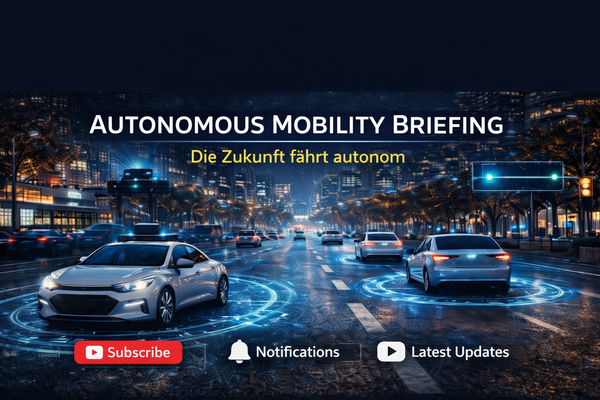
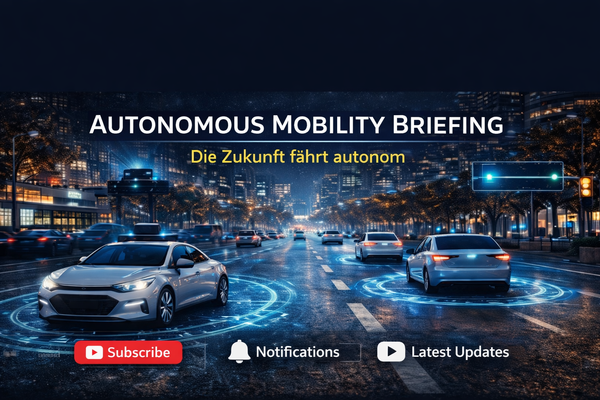
Autonomous Mobility Briefing #6
Autonomy is moving into public-facing service. But the human layer is still everywhere — from Singapore and Jacksonville to Leuven and KIRA in Germany.
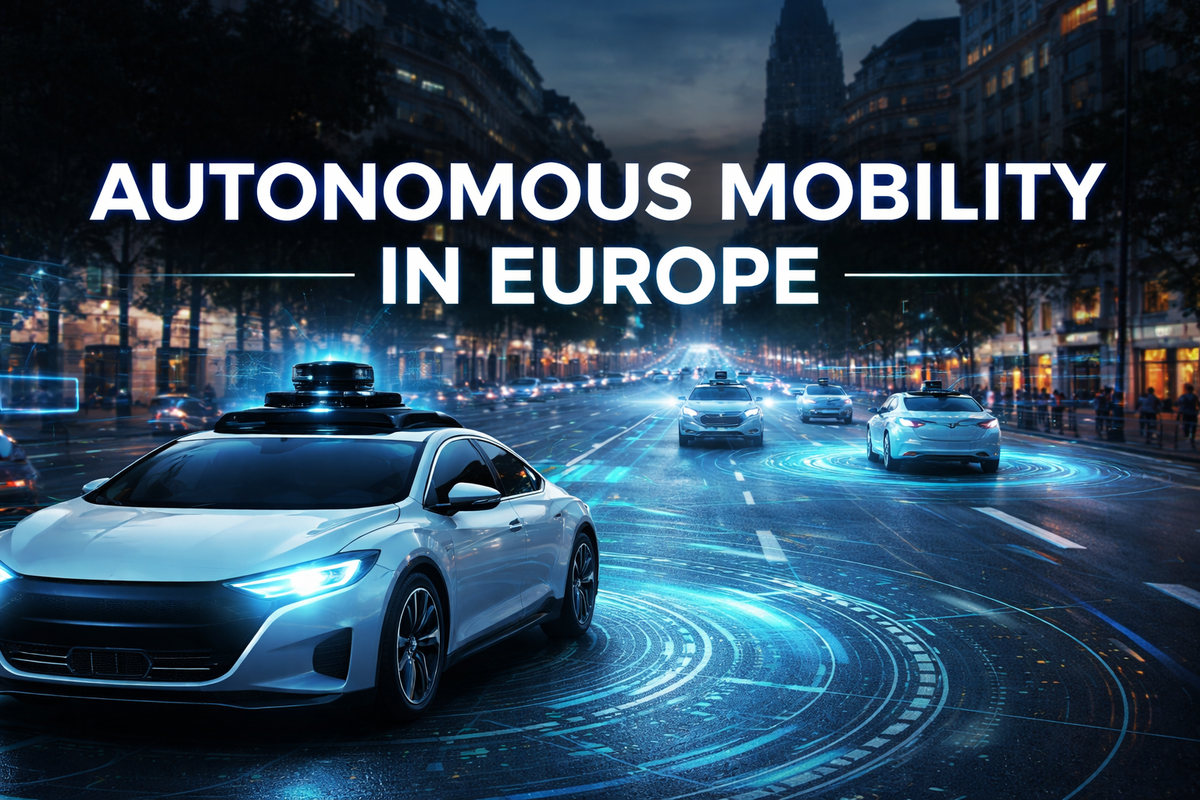
AUTONOMY HITS THE STREETS.
THE HUMAN BACKUP STAYS.
Singapore opens public AV rides, Germany expands KIRA, Leuven keeps Europe in pilot mode, and Jacksonville shows that transit agencies still want more autonomy. The pattern is getting clearer: the vehicle may look autonomous, but scale still depends on supervision, operating limits and control-centre logic.
ENGLISH VERSION
GLOBAL
Autonomous mobility is reaching the public, but only inside a tightly managed safety cage.
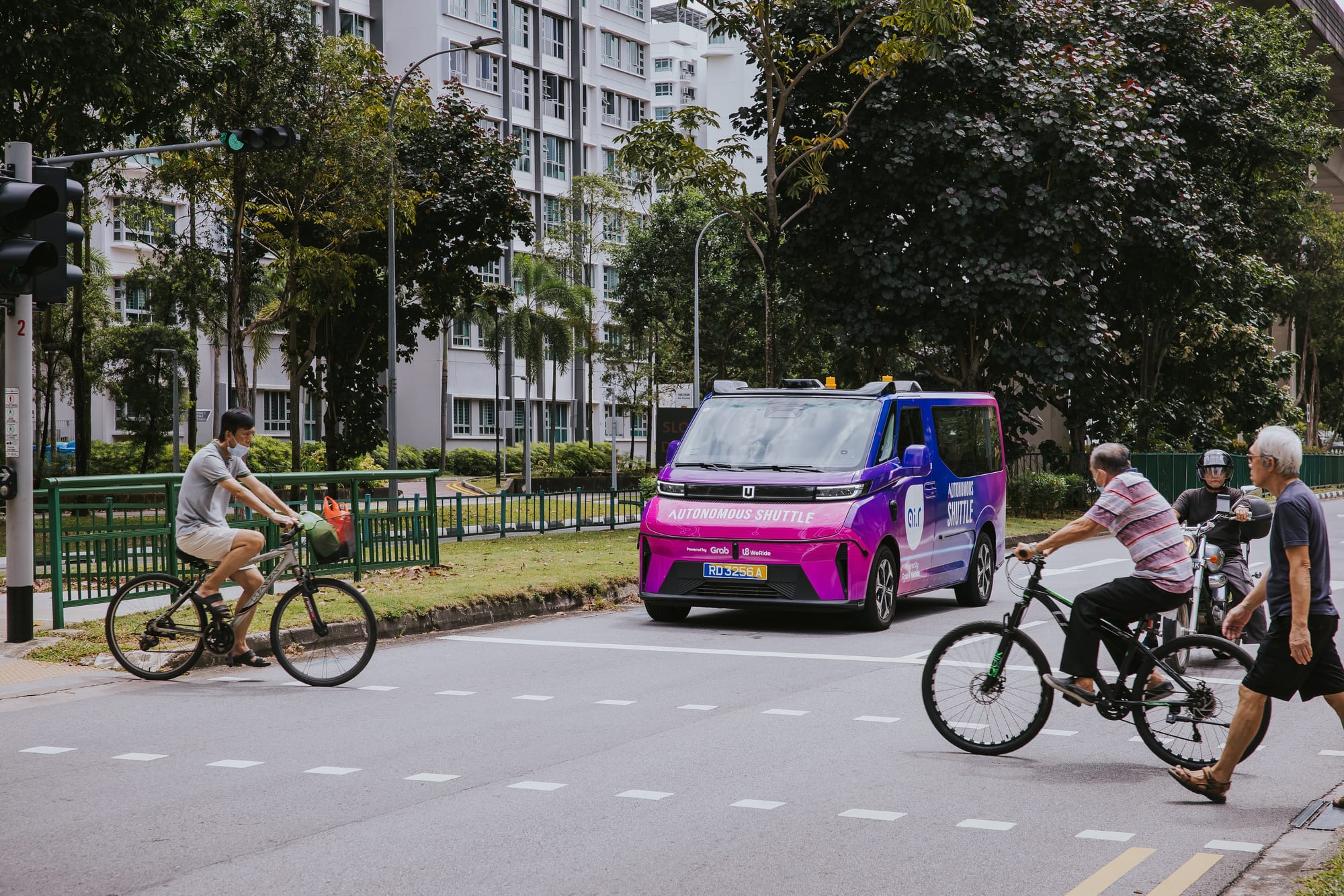
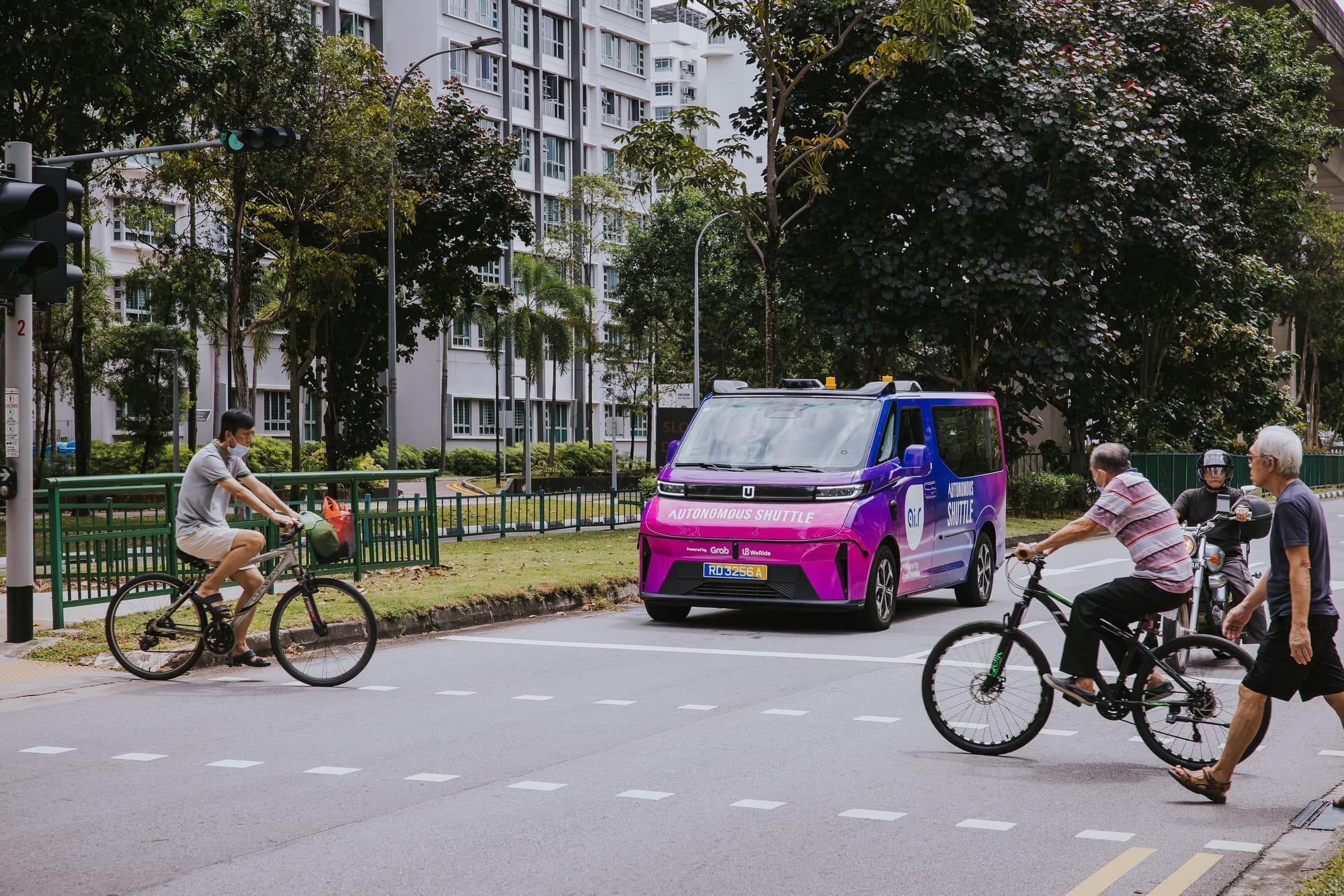
Grab and WeRide have officially launched public autonomous rides in Punggol. That matters because this is no longer just an engineering test behind the fence. It is public-facing service. But the harder truth sits underneath the headline: more than 1,000 early riders and over 30,000 km of autonomous mileage did not remove the need for onboard safety operators or remote-operations training. The machine is moving into public service. The human backup remains part of the product.
SHORT NEWS
Jacksonville is moving in the same direction, even if much more cautiously.
The JTA is exploring a wider AV transit footprint beyond downtown through its U²C program and a new R&D pilot that can include buses and passenger vehicles. That is not a mass rollout. But it is a clear signal that public agencies still see autonomy as an operating-system question, not just a vehicle question.
EUROPE
Europe still looks less like a launch market and more like a permission market.
Leuven’s shuttle service is now carrying passengers and has moved on from pure engineering tests. But the core setup has not changed: fixed route, limited operating window, tightly framed conditions and continuous supervision. Europe is not standing still. It is just standardising caution instead of standardising speed.
Source: https://www.delijn.be/en/content/investeren-in-morgen/leuven-autonome-mobiliteit-in-actie/
GERMANY
KIRA is not selling a miracle. It is extending a working service block by block.
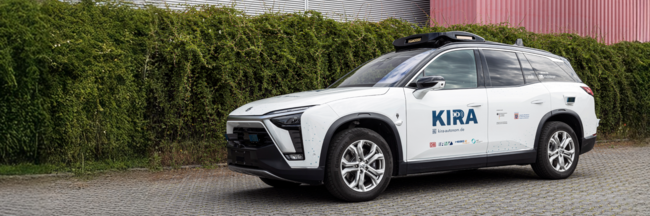
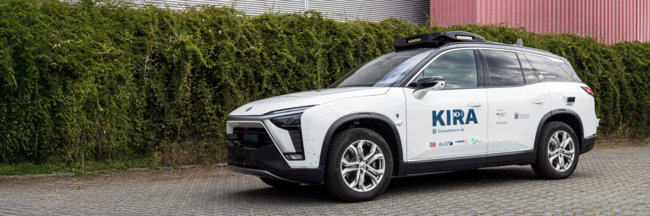
KIRA remains one of the most concrete signals in the German market. The pilot now runs longer hours, has expanded its operating area, is using additional vehicles and has more than 3,500 approved test users. The important distinction is obvious: this is not another stage presentation about what autonomous tech could someday do. It is supervised service already being stretched toward real demand.
Source: https://www.rmv.de/c/de/ueber-uns/presse/aktuelle-pressemitteilungen
PUBLIC TRANSPORT / ÖPNV
The bus story is the real stress test because buses have to work inside the timetable, not outside it.
Singapore’s autonomous public bus pilot on services 400 and 191 is not just a cute prototype. It is the more uncomfortable truth about autonomy moving into public transport. Route discipline, passenger interaction, mixed traffic, service reliability and safety validation all become visible at once. That makes buses more important than flashy AV taxi demos. They force the system to behave like transport, not tech.
Source: https://mustsharenews.com/autonomous-public-bus-arrives/

BOTTOM LINE
Autonomy is entering public service. But the ghost in the machine is still a human operating model.
The market keeps trying to sell autonomy as if software had already removed the messy middle. It has not. Safety operators, remote oversight, mapped domains, staged approvals and tightly managed pilots are still everywhere. The winners will not be the people who pretend that layer is gone. The winners will be the ones who industrialise it.
AUTONOMIE KOMMT AUF DIE STRASSE. DER MENSCH IM HINTERGRUND BLEIBT.
Singapore öffnet autonome Mobilität für die Öffentlichkeit, Deutschland weitet KIRA aus, Leuven hält Europa weiter im Pilotmodus, und Jacksonville zeigt, dass Verkehrsbetreiber mehr wollen. Das Muster wird klarer: Das Fahrzeug wirkt autonom, aber Skalierung hängt weiter an Aufsicht, Betriebsgrenzen und Leitstellenlogik.
DEUTSCHE VERSION
GLOBAL
Autonome Mobilität kommt im Alltag an, aber nur im eng geführten Sicherheitsrahmen.
Grab und WeRide haben in Punggol den öffentlichen Betrieb geöffnet. Genau das macht die Meldung relevant. Es ist kein abgeschirmter Techniktest mehr, sondern sichtbarer öffentlicher Einsatz. Aber die zweite Wahrheit bleibt dieselbe: Mehr als 1.000 frühe Fahrgäste und über 30.000 autonome Kilometer haben weder Sicherheitsbegleiter an Bord noch das Training für Remote Operations überflüssig gemacht. Die Technik rückt in den Alltag. Der menschliche Rückhalt bleibt Teil des Systems.
KURZNEWS
Jacksonville bewegt sich in dieselbe Richtung, nur deutlich vorsichtiger.
Die JTA prüft über das U²C-Programm und ein neues R&D-Pilotprogramm einen breiteren AV-Einsatz auch jenseits des Zentrums. Das kann Busse und Pkw einschließen. Noch ist das kein großer Durchbruch. Aber es ist ein klares Signal: Öffentliche Betreiber sehen Autonomie weiter als Betriebsfrage, nicht nur als Fahrzeugfrage.
EUROPA
Europa wirkt weiter eher wie ein Genehmigungsmarkt als wie ein Launch-Markt.
Leuven befördert bereits Fahrgäste. Reine Testfahrten sind vorbei. Aber die Struktur sieht immer noch klar nach Pilot aus: feste Strecke, begrenztes Betriebsfenster, eng definierte Bedingungen und dauerhafte Aufsicht. Europa steht also nicht still. Es industrialisiert nur Vorsicht statt Tempo.
Quelle: https://www.delijn.be/en/content/investeren-in-morgen/leuven-autonome-mobiliteit-in-actie/
DEUTSCHLAND
KIRA verkauft kein Wunder. Es verlängert einen funktionierenden Betrieb Block für Block.
KIRA bleibt eines der konkretesten Signale im deutschen Markt. Der Pilot läuft länger, fährt mit mehr Fahrzeugen, bedient mehr Gebiet und zählt inzwischen mehr als 3.500 zugelassene Testnutzer. Genau das ist der relevante Unterschied: Hier geht es nicht um die nächste große Bühne, sondern um einen überwachten Betrieb, der Schritt für Schritt in Richtung echter Nachfrage wächst.
Quelle: https://www.rmv.de/c/de/ueber-uns/presse/aktuelle-pressemitteilungen
ÖPNV
Der Bus ist der härteste Test, weil er im Takt funktionieren muss und nicht nur in der Demo.
Der autonome Buspilot in Singapore auf den Linien 400 und 191 ist mehr als nur ein nettes Fahrzeugbild. Sobald ein System in den ÖPNV rückt, werden Fahrplan, Haltepunkte, Fahrgäste, Mischverkehr, Zuverlässigkeit und Sicherheitsfreigabe gleichzeitig sichtbar. Genau deshalb sind Busse oft wichtiger als glänzende Robotaxi-Demos. Sie zwingen das System, wie Verkehr zu funktionieren, nicht wie Tech.
Quelle: https://mustsharenews.com/autonomous-public-bus-arrives/

FAZIT
Autonomie geht in den öffentlichen Betrieb. Aber der Geist in der Maschine bleibt vorerst menschlich.
Der Markt versucht weiter, Autonomie so zu verkaufen, als hätte Software das unordentliche Zwischenstück schon beseitigt. Hat sie nicht. Sicherheitsfahrer, Remote Oversight, kartierte Domänen, gestufte Freigaben und streng geführte Pilotfelder sind weiter überall sichtbar. Gewinner werden nicht die sein, die diese Ebene wegreden. Gewinner werden die sein, die sie sauber industrialisieren.
Thorsten Besendahl
Autonomous Mobility Briefing
Independent insights on robotaxi scaling, regulation and fleet economics in Europe.
Newsletter: https://lnkd.in/eXZdHfVU